


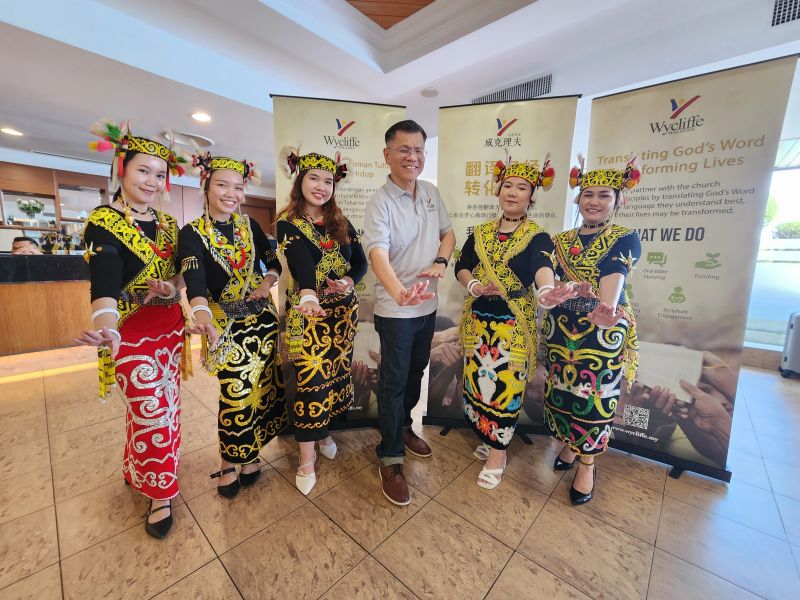
After serving on the Board of Wycliffe Malaysia for eight years, I finally had the opportunity to visit one of our Scripture translation projects among the Kyh people in Miri, Sarawak.
It was deeply moving to worship together, share in Holy Communion, and hear the Bible read aloud in the Kyh heart language.
There is something profoundly beautiful about hearing Scripture in the language people know best—and seeing the Word take root in a community.
That morning, the Kyh pastor, Pastor Uchat, preached about forgiveness.
Over lunch, he shared a story that brought his message to life.
Years ago, two men from different tribes went into the jungle to hunt wild boars. One man had tied up a hammock and was resting in it, gently swinging from side to side.
From a distance, the other man saw the movement and mistakenly thought it was a wild boar.
He fired his gun.
The man in the hammock was killed instantly.
The tragedy could easily have sparked years of revenge and bloodshed between the two tribes. Historically, retaliation could be seen as a matter of honour. The Kyh people used to be aggressive in nature and were headhunters.
But something had changed when the gospel reached the Kyhs.
The community abandoned their past practice of killing and revenge.
When the man responsible was eventually released from prison after serving his sentence, the victim’s community chose not to seek revenge.
They forgave him.
As a lawyer, I spend much of my working life thinking about justice and the rule of law. Wrongdoing must be confronted and accountability matters.
But while the law can impose a criminal sentence it cannot compel a human heart to forgive.
That is where the gospel speaks with extraordinary power.
Forgiveness does not pretend that the wrong never happened. It does not make justice unnecessary. Rather, it breaks the cycle of retaliation and refuses to allow one act of wrongdoing to produce another.
That morning in Miri, I was reminded that Scripture translation is about much more than putting words on a page.
It is about making the Word accessible in a people’s own language—and seeing the gospel change how people understand God, justice, relationships and even how they respond to those who have wronged them.
When the gospel takes root, it doesn’t merely change what people believe. It can change how communities live.


As originally published in this: Wong Fook Meng’s Post