ONE afternoon I had tea with a Bible translator from another organization. Visitors had been to her Orang Asli (OA) community and had given talks in Bahasa Malaysia (BM). After they had left, she checked with the community how much they had understood. It was much less than 50%.
That gave me food for thought. I had the impression that most OA are fluent in the national language. How much can the OA grow if theological input is mainly in BM? My wife and I were missionaries in the Philippines, and we knew the importance of learning the heart language of the people. We also knew missionaries who avoided learning the local language and just used English. But if we wanted to understand Filipinos from the heart, we had to learn their heart language just as how other missionaries had encouraged us.
Time and experience proved the wisdom of this advice. People could communicate more freely with us when they did not have to struggle in English, especially when they did not know the vocabulary that they needed. There were also nuances in communication, such as idioms, body language, and expressions, that could only be grasped after one has progressed into fluency in Pilipino (Tagalog). Language is the gateway to culture: my wife and I could learn so much more about the local people and their culture once we mastered rudiments of their language.
God’s Word translated into a culture’s language also impacts its people. We witnessed this with one indigenous people group in the Philippines who had the Scriptures translated into their language. Vera Khor, a Malaysian Bible translator, together with her colleague, helped made this possible. We saw the people of this tribe own their faith, just like the other mainstream groups in the Philippines who already had the Scripture in their heart languages.
It is therefore exciting to know that in 2016, Wycliffe Malaysia began to consider the language needs of people in our own country. By 2019, the first local translation project had begun. Since then there have been many more Bible translation projects, not only with OA languages, but with Tamil and Penang Hokkien as well. There are also written Bible translations, and this could pave the way for Malaysians to learn a new language in order to partner in ministry in those cultures.

Malaysians should be concerned about local Bible translation needs. There are foreigners, like Singaporeans, who want to see this work done in Malaysia. Surely our own local people cannot be less enthusiastic.

All churches should be involved in Bible translation. It is not just the responsibility of Bible translation agencies such as Wycliffe Malaysia. Bible translation is an essential component of missions work.

In this age of Artificial Intelligence, there may be assumptions that Bible translation will soon become obsolete. It would be good to avoid this overly simplistic perception by first understanding the full process of Bible translation.

The preservation of language is the preservation of culture. There are examples in the world where the languages of ethnic minorities are edged out as they get assimilated into the wider society. When a language disappears, that very culture may follow as well. For example, many non-Japanese are familiar with aspects of Japanese culture: anime, samurai, karate, bento, ramen, ikigai and even Ajinomoto. What might happen if Japanese language were to suddenly disappear overnight?
To contextualise and to conclude, the diversity of people in Malaysia contributes to the richness of culture of our country. Bible translation will not only bring greater understanding of Scripture, but will help preserve the various cultures of Malaysia.
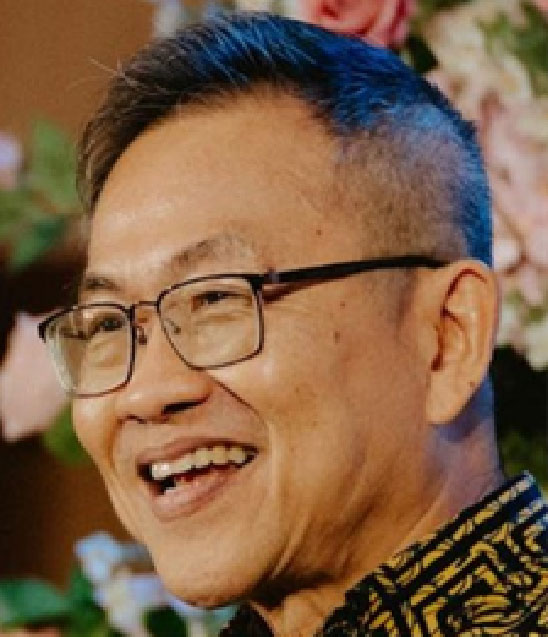
Ron Low has served as a board member of Wycliffe Malaysia since 2021.
He is the Vice Chairman of the Wycliffe Board and the Chairman of the Membership Committee.